It is 11 at night, and a young couple is lying on the couch, phones in hand. In twenty minutes they have browsed forty homes, taken two 3D walkthroughs, and asked a chatbot about parking. They have not spoken to a single agent yet. This is why real estate platform technology now shapes who wins the sale. In its 2022 Home Buyers and Sellers Generational Trends report, the National Association of Realtors (NAR) found that 95% of buyers used the internet in their home search.
That shift moves your website or app to the center of your business. It is often the first showing, the first conversation, and the first impression all at once. If it feels slow or generic, buyers simply swipe to a competitor.
In this guide, you will see how seven technologies are changing property listing platforms, from AI and virtual tours to blockchain and IoT. For each one, you will learn how it works, what it does for your bottom line, and where it fits in a real product. You will also get a framework for choosing your stack and a look at what comes next.
How Is AI in Real Estate Changing Property Search and Sales?
Artificial intelligence and machine learning teach your platform to learn from behavior. It studies clicks, saved homes, and filters to learn what each user wants, even when they cannot say it. This is the engine behind the most useful features on any modern property listing platform.
Here is where AI earns its place:
- Smart property recommendations: The platform suggests homes based on patterns, such as a user who keeps lingering on corner plots with gardens.
- Price prediction: Automated valuation models compare recent sales, location data, and property features to estimate fair value in seconds.
- Lead scoring: The system ranks leads by intent, so agents call the buyer who viewed one listing six times before the casual browser.
- Listing quality checks: AI flags blurry photos, missing details, or prices far outside the local range before a listing goes live.
Morgan Stanley Research estimates that AI could automate 37% of tasks in real estate and create about $34 billion in operating efficiencies by 2030. The study looked at 162 REITs and commercial real estate firms, but the lesson holds for agencies too. Less time on repetitive work means more time closing deals.
Consider a brokerage with 40 agents and thousands of monthly inquiries. Before lead scoring, agents worked through leads in the order they arrived. After adding an AI model to their real estate CRM, they call the highest intent buyers first. Everyone else gets nurture emails automatically, and agent hours go where they matter most.

Virtual Property Tours: How AR VR Is Changing Showings
Virtual reality and augmented reality let buyers experience a property without standing inside it. VR creates a 3D walkthrough you explore on a screen or headset. AR adds digital objects to the real world through a phone camera. Together, AR VR property tours turn a flat photo gallery into a space people can move through.
On a real estate platform, these tools usually show up in a few forms:
- 3D virtual tours captured with specialist cameras and embedded right on the listing page.
- Virtual staging, which fills empty rooms with digital furniture so buyers can picture daily life there.
- AR room planners that let users point a phone at a wall and test paint colors or furniture sizes.
- Off plan visualization for developers who need to sell units before construction is complete.
The biggest benefit is filtering. Buyers who still book a visit after a virtual tour are serious. Your agents spend fewer weekends on showings that go nowhere, and virtual staging costs a fraction of the physical kind.
Picture a developer launching a 200 unit tower that will not be ready for two years. Instead of building a costly sample flat, the team offers VR walkthroughs of three floor plans with different finishes. Overseas buyers explore the units from home and reserve them online. Sales start years earlier, and the marketing budget stretches further.
Blockchain in Real Estate: Secure Transactions and Tokenization
Blockchain is a shared digital ledger that records transactions in a way that is very hard to alter. Smart contracts sit on top of this ledger. They are small programs that run automatically when agreed conditions are met, such as releasing a deposit once inspection documents arrive.
For your business, this enables digital real estate transactions with clear advantages:
- Fraud resistance: Records cannot be quietly edited, so forged titles and fake payment trails are much harder to pull off.
- Transparent records: Ownership history and payment status are visible to every authorized party.
- Faster closings: Paperwork that once bounced between offices for weeks can move in days.
Tokenization is the most talked about use. A property is divided into digital tokens, and each token represents a share of ownership. Investors can buy a small slice of a commercial building instead of the whole asset. Owners gain a new way to raise capital.
For example, an investment platform splits a fully leased warehouse into 10,000 tokens that investors buy through the app. A smart contract sends rental income to their wallets every quarter, and every payout is logged on the ledger. Before you build this, check local securities and property laws, because rules on tokenized assets vary widely by country.
IoT in Real Estate: Smart Property Management in Action
The Internet of Things connects physical devices to the internet so they can share data. Think smart locks, thermostats, leak sensors, and energy meters. When these devices feed into your platform, a property stops being a static listing. It becomes a live system you can monitor from anywhere.
For property managers and landlords, smart property management brings clear wins:
- Remote access control: Tenants and service staff get digital keys that can be issued or revoked instantly.
- Predictive maintenance: Sensors spot a failing pump or rising humidity before it turns into an emergency repair.
- Energy savings: Smart thermostats and lighting adjust to occupancy, which lowers utility bills.
- Better tenant experience: Residents report issues, book amenities, and track requests from one app.
IoT data also strengthens your listings. A home with a documented record of low energy use and steady maintenance is easier to sell. Buyers trust numbers more than adjectives.
Take a rental company managing 1,500 apartments across a city. Leak sensors under every sink alert the maintenance dashboard the moment water appears. A technician arrives within the hour, long before the ceiling below is ruined. Over a year, avoided water damage can cover much of the sensor rollout.
How Do Big Data and Predictive Analytics Help Real Estate Investors?
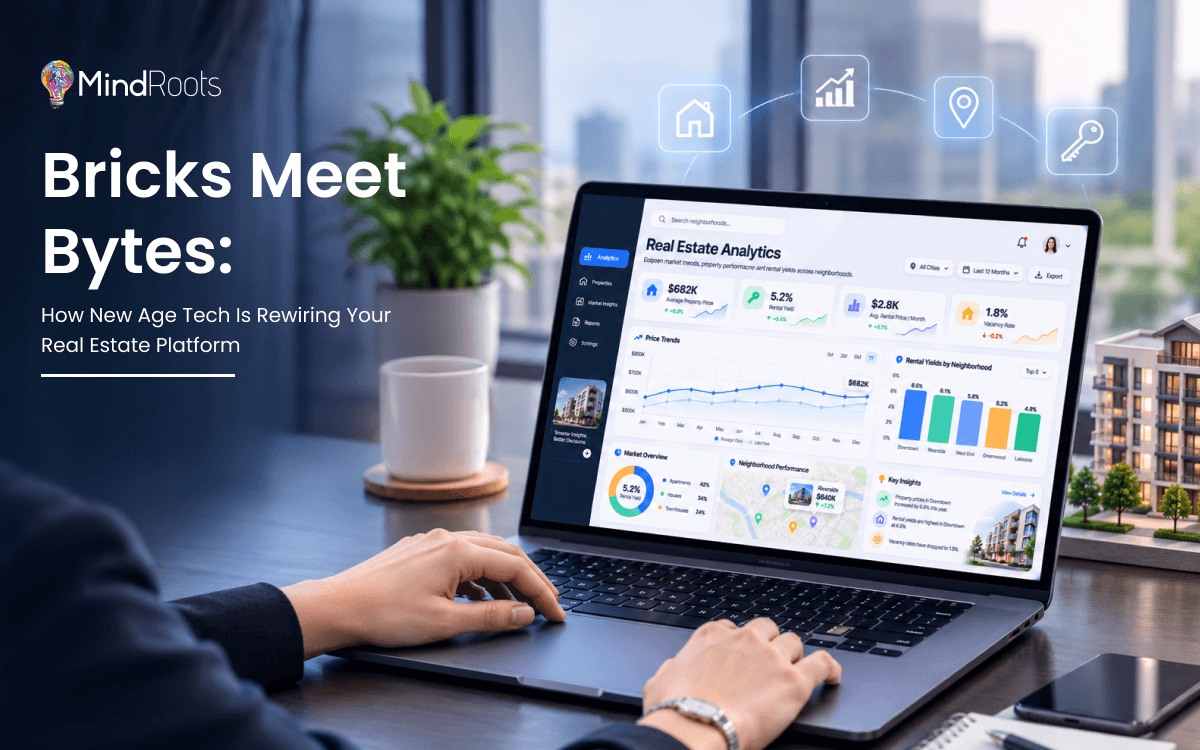
Big data is the huge volume of information your platform and the wider market produce every day. Think search behavior, past sales, rents, and new infrastructure. Predictive analytics in real estate uses statistical models and machine learning to find patterns in that data. Then it forecasts what comes next.
On your platform, this can power neighborhood scorecards, price trend charts, rental yield calculators, and hotspot alerts. Investors no longer rely on gut feeling or stale reports. The business benefits stack up quickly:
- You can spot rising demand in a suburb before prices climb and guide clients toward it.
- Developers can choose land and unit mixes based on what local buyers actually search for.
- Your marketing team can aim ads at areas where search volume is growing fastest.
- Investors get clear, data backed reports that build trust in your brand.
Imagine an investor dashboard that notices a jump in searches for two bedroom rentals near a new metro line. It flags the area, shows average rents, and estimates yield at current prices. An investor acts months before the trend reaches the news. That kind of foresight keeps users coming back.
Chatbots for Real Estate: 24/7 Lead Engagement
AI chatbots and virtual assistants answer questions instantly, at any hour. Modern bots use large language models connected to your listing database. They can search inventory, explain features, and book viewings in the same conversation.
Speed matters because property leads cool down fast. A buyer who asks a question at midnight and hears nothing until noon may have booked elsewhere. A chatbot captures that lead at peak interest and qualifies it by asking about budget, location, and timeline.
A good assistant on a real estate platform should be able to:
- Answer common questions about price, size, amenities, and availability.
- Schedule site visits directly into an agent’s calendar.
- Capture contact details and push them into your real estate CRM.
- Hand the chat to a human agent smoothly when it gets complex.
- Support several languages for international or diverse local audiences.
A rental agency could deploy a WhatsApp assistant that sends the first reply to every listing inquiry. The bot answers basic questions, confirms the tenant’s move in date and budget, and books a viewing slot. Response time drops from hours to seconds.
Cloud Computing and Mobile First Platforms
Cloud computing gives your platform servers, storage, and processing power on demand from providers like AWS, Google Cloud, or Microsoft Azure. This is the layer that keeps your real estate platform technology fast and stable as you grow. It brings several practical gains:
- Elastic scale: You pay for what you use and add capacity when traffic spikes during a big launch.
- Speed: Content delivery networks load heavy 3D tour files quickly for users anywhere.
- Safety: Automatic backups and managed security reduce the risk of data loss.
Mobile first design is the other half of this foundation. NAR’s 2021 Home Buyers and Sellers Generational Trends report found that 76% of buyers used a mobile phone or tablet in their search. Your app and mobile site are the main channels, not secondary ones. Real estate app development and real estate website development should both start with small screens.
That changes what you build. Map based search, saved searches with push alerts, and one tap calls to agents matter far more on a phone. Plan for them from day one.
How to Choose the Right Real Estate Platform Technology for Your Business
With so many options, it is easy to chase every trend at once. That leads to a bloated product and a blown budget. The smarter route is to match technology to your business model and your users’ biggest frustrations.
Follow these steps before you commit to any real estate software development project:
- Define your core user. A rental marketplace, a luxury brokerage, and an investment platform need very different features.
- List the biggest friction points. Talk to buyers, tenants, and agents. Find where deals stall or leads drop off.
- Rank ideas by impact and effort. Start with features like smart search, a CRM, and a chatbot that deliver quick returns.
- Plan for integration. Make sure new tools connect with your MLS feeds, payment gateways, and CRM.
- Launch a minimum viable product first. Ship the essentials, measure usage, and add advanced tech in later phases.
- Pick a partner with real estate experience. A team that understands listings, compliance, and agent workflows will save you months.
Budget for compliance from the start. Data privacy laws and property rules differ across regions, and fixing gaps after launch always costs more. The right real estate platform technology is the one your users adopt and your team can maintain.
What Are the Future Trends in Real Estate Platform Technology for 2026 and Beyond?
The next wave of proptech solutions is already taking shape. Here is what to watch:
- Agentic AI: Assistants that act, not just chat. They will compare mortgage offers, book inspections, and prepare paperwork for approval.
- Digital twins: Live virtual copies of buildings that combine IoT data with 3D models for planning and maintenance.
- Generative AI for listings: Descriptions, floor plan sketches, and staged images created in seconds.
- Wider tokenization: As regulations mature, fractional ownership could move from niche pilots to mainstream products.
- Green building data: Energy ratings will become standard search filters as buyers care more about efficiency.
The common thread is trust and convenience. Buyers want accurate information, instant answers, and safe transactions. Platforms that deliver all three will lead the next decade.
Final Thoughts on Building a Future Ready Platform
The bricks still matter, but the bytes now decide who finds them first. AI sharpens search and lead scoring. Virtual tours save weekends. Blockchain adds trust to transactions, IoT keeps buildings healthy, and predictive analytics points investors to the next hotspot. Chatbots catch leads at midnight, and a cloud based, mobile first foundation holds it all together.
You do not need every tool on day one. You need the right real estate platform technology for your users, rolled out in smart phases that pay for themselves. Start with the friction your buyers feel most, fix it, and build from there.
Ready to build a future ready real estate platform? Connect with [Your Company Name] today. Our team will help you plan, design, and develop a website or app that turns more visitors into buyers.