


You have a great idea. You might even have paying customers already. But somewhere in the back of your mind, a quiet worry keeps surfacing: what happens when this actually takes off?
Will the platform hold up when a thousand people sign up in a week? Will you find out too late that the way it was built cannot support real growth? Will you end up paying twice, once to build it and once to rebuild it properly?
This is one of the most common fears among founders building a SaaS product, and one of the least talked about. Custom Web App Development is not just a technical checkbox. It is the foundation your entire business sits on, and getting it wrong quietly drains money, time, and trust in ways that are hard to undo.
The good news is that you do not need to become a developer to get this right. You need to understand the big picture well enough to ask good questions and choose the right partner. That is exactly what this guide is for.
Why This Keeps Founders Up at Night
Most non technical founders have heard a horror story, or lived one. A platform that worked fine with 50 users and fell apart at 5,000. A freelancer who built something nobody else can maintain. A rebuild that cost more than the original project.
These stories are common because SaaS products are deceptively simple on the surface and genuinely complex underneath. What looks like “just a website with a login” is actually a system that needs to handle data, traffic, security, and constant change, all at once.
The fear is not irrational. It is a sign you are thinking like a responsible founder. The goal now is to turn that fear into informed confidence.
What “Scalable Architecture” Actually Means
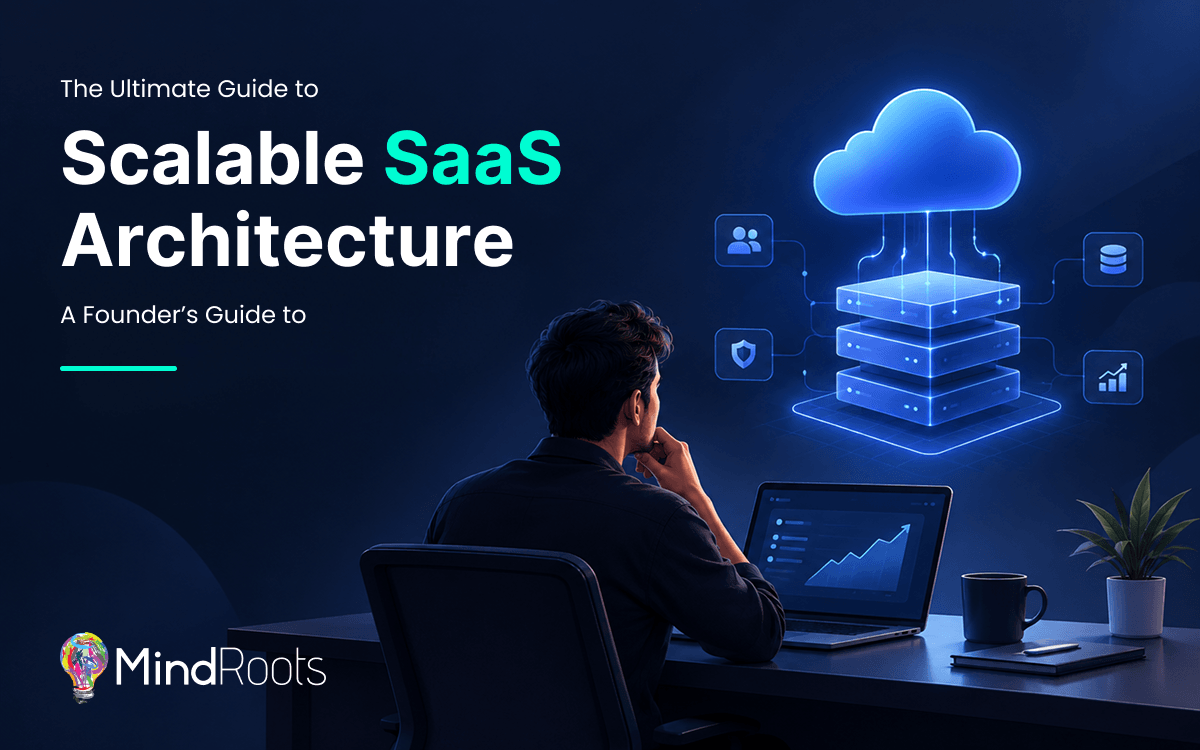
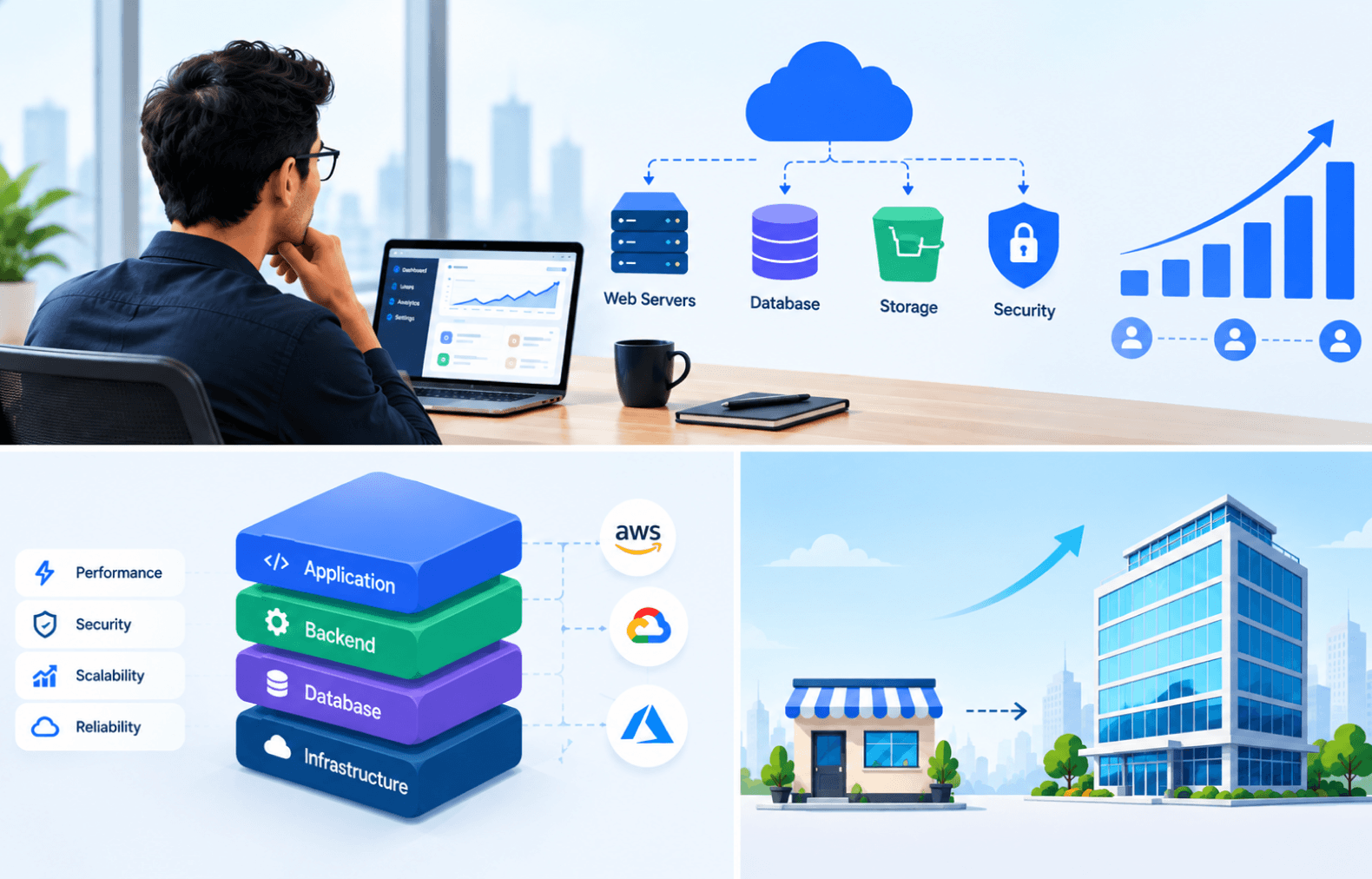
Let’s strip away the jargon. Scalable architecture simply means the way your software is built so it can handle more users, more data, and more features without falling apart or needing to be rebuilt from scratch.
Think of it like constructing a building. A small shop can be built quickly with basic materials because it only needs to hold a handful of people. But if you want to eventually turn that shop into a ten story office building, you need proper foundations, wiring, plumbing, and structural planning from day one. You cannot just keep stacking floors on top of a structure that was never designed to hold that weight.
Software works the same way. A poorly architected SaaS product might work perfectly for your first 100 users. Then, as you grow, pages start loading slowly, features start breaking, and every new addition takes longer and costs more to build.
Scalable architecture means building the foundation properly from the start, even if you launch small, so growth becomes a matter of adding floors, not tearing down walls.
Why This Matters More for SaaS Than Other Websites
A brochure style website for a local business rarely needs to worry about scale in this way. A SaaS product is different because it usually involves:
- User accounts and permissions
- Ongoing data storage that grows every day
- Multiple users interacting with the same system at once
- Regular updates and new features after launch
This is why Website Development for a SaaS platform is a fundamentally different project than a standard business Website Designing job, even though both might look similar from the outside.
The Building Blocks of a Scalable SaaS Product
You do not need to master these concepts. You just need enough understanding to have an informed conversation with whoever builds your product.
1. Choosing the Right Tech Stack
The “tech stack” is simply the combination of programming languages, frameworks, and tools used to build your product. Think of it like choosing the materials and construction method for a building. Wood, steel, and concrete each have strengths depending on what you are building and how tall it needs to go.
There is no single “best” stack for every SaaS product. The right choice depends on your specific needs, such as expected user volume, the complexity of your features, your budget, and your timeline. A good agency will recommend a stack based on your business goals, not on what they happen to know best.
What matters most for you as a founder is asking why a particular stack was chosen and making sure the answer connects back to your growth plans, not just convenience for the developer.
2. Cloud Infrastructure Basics
Cloud infrastructure is where your application actually lives and runs. Instead of owning physical servers, you rent computing power from providers like AWS, Google Cloud, or Microsoft Azure.
Think of this like renting warehouse space. You can start small and expand as needed, rather than buying an entire warehouse upfront and hoping you eventually fill it. The cloud lets your product automatically use more resources when traffic spikes and scale back down when it is quiet, so you are not paying for capacity you do not need.
The key benefit for a growing SaaS business is flexibility. You should never have to rebuild your infrastructure just because your user base grew faster than expected.
3. Database Design for Growth
Your database is where all your user information, activity, and content live. Poor database design is one of the most common reasons SaaS products slow down or break as they grow.
Imagine a filing system. A small filing cabinet works fine for a handful of folders. But if you keep adding thousands of documents without ever organizing them into proper categories, sections, and labels, finding anything becomes slow and chaotic.
A well designed database is organized from the start so that as your data grows into the thousands, then millions of records, your application can still retrieve information quickly. This is invisible to your users when done right, and painfully obvious when done wrong.
4. Microservices vs Monoliths, Explained Simply
This sounds technical, but the concept is straightforward.
A monolith is when your entire application is built as one large, interconnected system. Everything lives together, like a single large machine where every part depends on every other part.
Microservices break your application into smaller, independent pieces that each handle a specific job, like separate machines that can be upgraded or fixed individually without shutting down the whole factory.
For many early stage SaaS products, a well built monolith is actually the smarter, more cost effective choice. Microservices can add unnecessary complexity and cost before you have the user base to justify them. The right approach depends on your current stage and future plans, and an experienced team should be able to explain their reasoning clearly rather than defaulting to whatever sounds more impressive.
5. Security and Compliance Basics
Security is not optional, and it is not something to think about later. Depending on your industry, you may also need to consider compliance requirements such as GDPR, HIPAA, or SOC 2, especially if you handle sensitive customer data.
At a minimum, your SaaS product should include:
- Encrypted data storage and transmission
- Secure user authentication
- Regular security updates and monitoring
- Clear data backup and recovery plans
You do not need to become a security expert. You need a development partner who treats security as a built in practice, not an afterthought bolted on before launch.
Where Should Your Budget Actually Go?
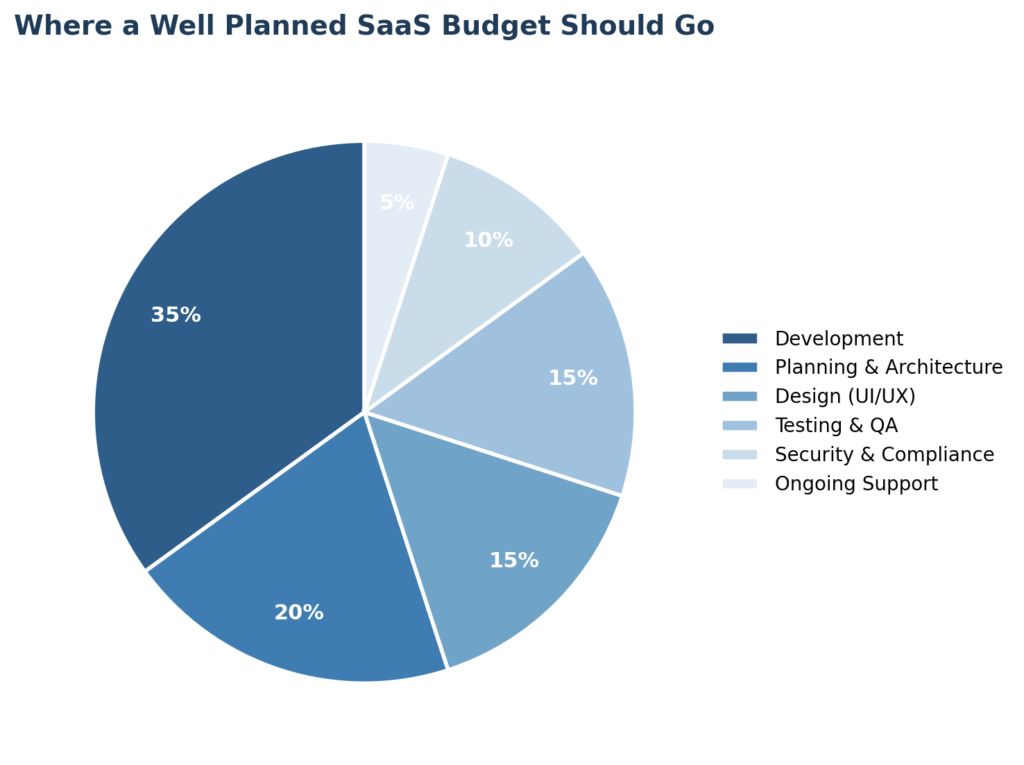
One question we hear from almost every founder is where their money should actually be spent. A healthy, sustainable SaaS build usually follows a similar pattern, even though exact numbers shift depending on your product’s complexity.
Common Mistakes Non Technical Founders Make
Understanding these mistakes now can save you significant time and money later.
- Choosing based on price alone. The cheapest option often means cutting corners on architecture, which leads to expensive rebuilds down the line.
- Hiring multiple freelancers separately. Different people building different parts without a unified plan often creates a system that does not fit together properly.
- Skipping proper planning to launch faster. Rushing into development without a clear technical plan almost always costs more time overall, not less.
- Not asking about scalability upfront. If growth is not part of the conversation from day one, it becomes a much more expensive conversation later.
- Assuming technical decisions are someone else’s problem entirely. You do not need to make these decisions yourself, but you do need to stay involved enough to ask the right questions.
How We Can Build Your Website End to End
This is exactly why founders choose to work with a single, experienced partner rather than juggling multiple freelancers or vendors.
A capable development agency manages your entire journey from idea to a fully scalable product, so you can stay focused on running your business while experts handle the technical foundation. This typically includes:
- Planning and strategy, where your business goals are translated into a clear technical roadmap
- Design, creating an experience that feels intuitive and professional for your users
- Development, building your Custom Web App Development project on a foundation designed for growth from day one
- Testing, catching issues before your customers ever encounter them
- Deployment, launching your product smoothly and securely
- Ongoing support, so your Website for Business continues to run reliably as you grow, add features, and scale
Instead of managing five different vendors and hoping they all communicate well with each other, you work with one accountable team that understands your product from the very beginning and stays with you as it evolves.
You Do Not Need to Have All the Answers
Being a non technical founder does not put you at a disadvantage. It simply means you need a partner who can translate complex technical decisions into clear business terms, someone who explains the why behind every recommendation, not just the what.
The founders who succeed are not the ones who learn to code. They are the ones who ask smart questions, understand the fundamentals well enough to evaluate advice, and choose partners who prioritize their long term success over quick, short term wins.
You already understand your business, your customers, and your vision better than anyone else. Let an experienced team handle the architecture, so your product is ready to grow the moment your business is.
Ready to Build Something That Actually Scales?
If you are ready to move forward with confidence instead of uncertainty, we would love to talk. Reach out for a free consultation, and let’s map out a technical foundation built for where your business is going, not just where it is today.